


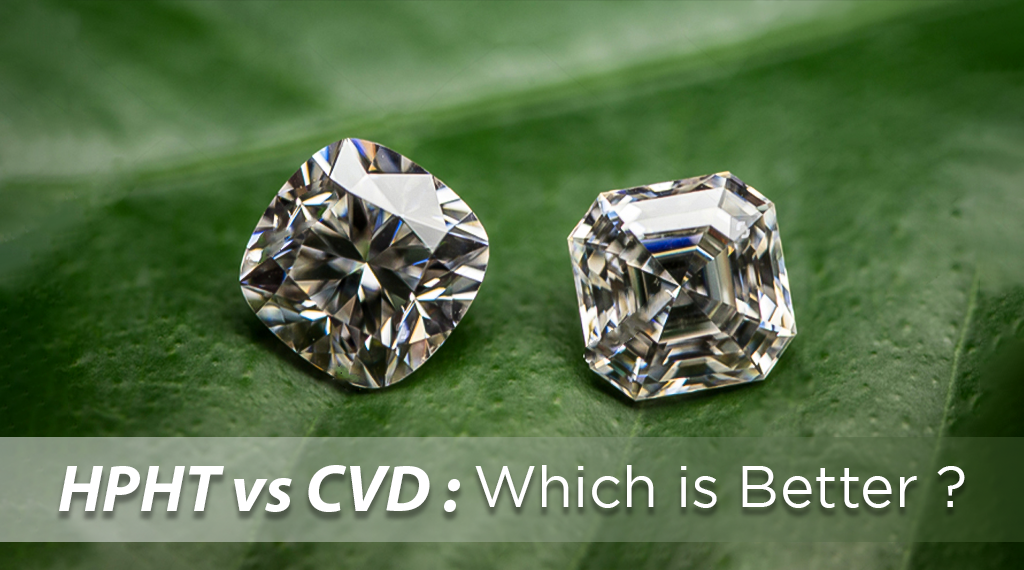
In the world of synthetic gemstones, the debate of hpht vs cvd has become increasingly relevant as consumers become more interested in the science and sustainability behind their jewelleryThese two methods—HPHT (High Pressure High Temperature) and CVD (Chemical Vapor Deposition)—are the most common techniques for creating lab made diamondsBoth processes produce real diamonds, yet they differ significantly in method, cost, and crystal characteristicsIf you’re in the market for a lab-grown gem, understanding the differences between these two technologies is crucial to making an informed choice.
Table of Contents
What Are Lab Made Diamonds?
Lab made diamonds are real diamonds that are grown in a controlled environment, simulating the natural conditions under which diamonds form in the EarthThey possess the same physical, chemical, and optical properties as mined diamonds but are often more affordable and ethically sourced.
The global demand for lab diamonds has exploded due to:
-
Eco-conscious consumers avoiding the environmental impact of mining.
-
Ethical concerns over conflict or “blood” diamonds.
-
Budget-savvy shoppers wanting more carat weight for their money.
-
Technological advancements that have perfected the creation process.
Now, let’s break down the two main creation methods: HPHT and CVD.
HPHT (High Pressure High Temperature)
How HPHT Works
HPHT mimics the extreme pressure and temperature conditions found deep within the Earth’s mantleA small diamond seed is placed in carbon, and under intense heat (over 1,500°C) and pressure (1.5 million pounds per square inch), the carbon melts and begins to crystallize around the seed, forming a diamond.
Characteristics of HPHT Diamonds
-
Often more colorless than CVD diamonds without post-treatment.
-
Can contain metallic inclusions due to the metal catalyst used in the process.
-
Typically cuboctahedral in crystal shape.
-
Excellent for larger carat sizes and fancy-colored diamonds.
-
Slightly more power-intensive than CVD.
Pros of HPHT
-
Efficient at producing high-quality, colorless diamonds.
-
Produces diamonds with minimal post-growth treatment required.
-
Often results in better Type IIa diamonds (free from nitrogen).
Cons of HPHT
-
May have metallic inclusions that can affect clarity.
-
More expensive equipment and energy use.
CVD (Chemical Vapor Deposition)
How CVD Works
CVD uses a different approachA diamond seed is placed in a vacuum chamber filled with carbon-rich gas (like methane)This gas is heated to high temperatures, breaking down the molecules and allowing carbon atoms to deposit onto the seed layer by layer, forming a diamond over time.
Characteristics of CVD Diamonds
-
Usually grown as flat plates (tabular growth).
-
Often need post-treatment to enhance clarity and color.
-
Fewer metallic inclusions, making them easier to polish and inspect.
-
Grows faster in controlled environments.
-
More scalable and cost-effective.
Pros of CVD
-
Typically cheaper and more energy-efficient.
-
Allows better control over diamond size and structure.
-
Produces very pure diamonds, especially Type IIa.
Cons of CVD
-
Often requires post-treatment to improve color.
-
May show growth lines or graining under magnification.
-
Can have brownish tints if not treated.
HPHT vs CVD: Key Differences at a Glance
| Feature | HPHT | CVD |
|---|---|---|
| Process | High temperature and pressure | Gas deposition in vacuum |
| Growth Speed | Faster for large diamonds | Faster for small/medium diamonds |
| Inclusions | Metallic | Non-metallic or graining |
| Cost | Higher equipment and energy costs | Lower production costs |
| Post-Treatment | Often unnecessary | Often required for color enhancement |
| Shape of Growth | Cubic | Tabular (flat) |
| Use Cases | Colorless & fancy diamonds | Commercial and retail diamonds |
Which One Is Better?
When comparing hpht vs cvd, the answer depends on what matters most to you.
Choose HPHT if:
-
You want a near-colorless diamond without additional treatments.
-
You’re looking for a fancy colored diamond (like yellow, blue, or pink).
-
You don’t mind slight metallic inclusions that are often invisible to the naked eye.
Choose CVD if:
-
You’re on a budget but still want a high-quality stone.
-
You prefer a diamond that is more likely to be free of metallic inclusions.
-
You want a purer Type IIa diamond that may just need color enhancement.
How to Tell the Difference
To the naked eye, it is nearly impossible to distinguish between an HPHT and a CVD diamondJewelers and grading labs use advanced tools such as spectroscopy and photoluminescence to determine the growth method.
When purchasing lab made diamonds, always ask for a grading report from reputable institutions like:
-
IGI (International Gemological Institute)
-
GIA (Gemological Institute of America)
These certificates often state the growth method and will provide details about the 4Cs—Cut, Color, Clarity, and Carat.
Lab Made Diamonds: Ethics Meets Elegance
Both HPHT and CVD diamonds offer a guilt-free alternative to mined diamondsThey’re 100% conflict-free, sustainable, and environmentally responsibleWith greater affordability and consistent quality, lab made diamonds are revolutionizing the jewellery industry.
As major jewellery retailers and luxury brands adopt lab-grown stones, consumers are empowered to make smarter choices that align with their values—without sacrificing beauty or brilliance.
Common Myths About Lab Grown Diamonds
1Myth: Lab diamonds aren’t real.
Truth: Lab made diamonds are physically, optically, and chemically identical to natural diamonds.
2Myth: Lab diamonds don’t last as long.
Truth: Lab diamonds are just as durable and will last forever, scoring a perfect 10 on the Mohs hardness scale.
3Myth: Lab diamonds are easily distinguishable.
Truth: Without specialized equipment, even gemologists can’t tell the difference visually.
4Myth: Lab diamonds have no resale value.
Truth: While resale markets are still developing, many buyers find the long-term savings and ethical benefits outweigh this consideration.
What the Future Holds
The future of the diamond industry lies in innovation and responsibilityWith both HPHT and CVD methods becoming more advanced, we can expect:
-
Faster growth times.
-
Even higher purity diamonds.
-
More competitive pricing.
-
Greater consumer education and transparency.
In the UK, US, and global markets, lab made diamonds are poised to take a growing share of engagement ring, fashion jewellery, and even industrial diamond segments.
Final Thoughts
When it comes to hpht vs cvd, there’s no clear winner—just the right choice for your personal needsBoth processes result in stunning diamonds that rival mined gems in every way, but they offer slightly different characteristics, costs, and aesthetics.
Whether you prefer the structural purity of CVD or the color brilliance of HPHT, lab made diamonds offer a beautiful, ethical, and intelligent alternative to traditional diamondsAs the jewellery world evolves, your sparkle doesn’t have to come at a cost to your conscience.